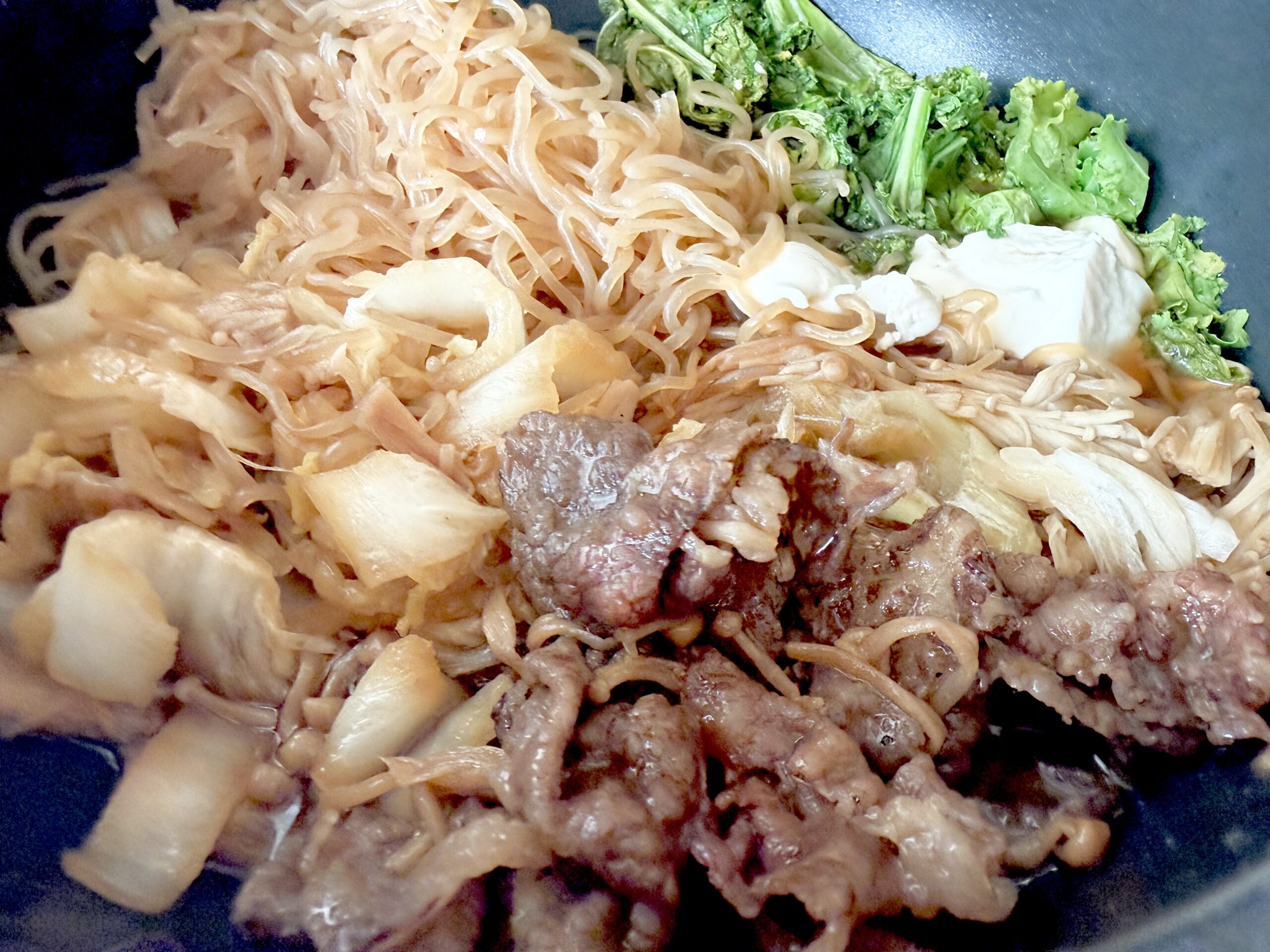
Sukiyaki may look like a special-occasion dish, but it is surprisingly easy to make at home.
This is how we usually make sukiyaki in our family. We first cook the beef, then add a homemade sukiyaki sauce, napa cabbage, green onion, mushrooms, shirataki noodles, and tofu.
Leafy vegetables such as shungiku or kale are added at the end so they do not become too soft.
You do not need a store-bought sukiyaki sauce for this recipe. The homemade sauce is made with water, sake, soy sauce, sugar, and dashi granules.
- Homemade Sukiyaki Ingredients
- Homemade Sukiyaki Sauce
- Prepare the Ingredients
- How to Make Sukiyaki
- Why We Cook the Beef First
- You Can Add Plenty of Napa Cabbage
- Shirataki Noodles Soak Up the Sauce
- Firm or Grilled Tofu Works Best
- Kale Is a Delicious Alternative to Shungiku
- How to Adjust the Sukiyaki Sauce
- You Can Make Sukiyaki in a Frying Pan
- Other Ingredients You Can Add
- Finish with Sukiyaki Udon
- Frequently Asked Questions
- Final Thoughts
- Related Recipes
Homemade Sukiyaki Ingredients
Serves 2–3
- 400 g (14 oz) thinly sliced beef
- Napa cabbage, as needed
- 1 Japanese long green onion or leek
- 1 package enoki mushrooms
- 1 package shirataki noodles
- 1 block firm or grilled tofu
- Shungiku or kale, as needed
- A small amount of beef fat or cooking oil
- 2–3 eggs, optional
The amount of vegetables does not need to be exact.
We often add more napa cabbage or use whatever mushrooms and vegetables we already have in the refrigerator.
Grilled tofu is commonly used for sukiyaki because it does not fall apart easily. Firm tofu also works well.
Homemade Sukiyaki Sauce
- 100 ml water
- 150 ml sake
- 150 ml soy sauce
- 8 tablespoons sugar
- Dashi granules, to taste
Our homemade sukiyaki sauce is fairly sweet and rich.
If you prefer a less sweet sukiyaki, start with 6 tablespoons of sugar. You can always add more after tasting the sauce.
Napa cabbage releases quite a lot of water as it cooks, so I do not usually pour in all the sauce at once.
Prepare the Ingredients
Cut the napa cabbage, green onion, enoki mushrooms, tofu, and leafy vegetables into easy-to-eat pieces.
Drain and rinse the shirataki noodles. If they are very long, cut them into shorter pieces with kitchen scissors.
Some shirataki noodles need to be boiled before cooking, while others can be used after rinsing. Check the instructions on the package.
Keep the shungiku or kale separate from the other vegetables because it will be added near the end.
Mix the water, sake, soy sauce, sugar, and dashi granules in a bowl or measuring jug.
The sugar does not need to dissolve completely because it will dissolve when the sauce is heated.
How to Make Sukiyaki
1. Cook the beef first
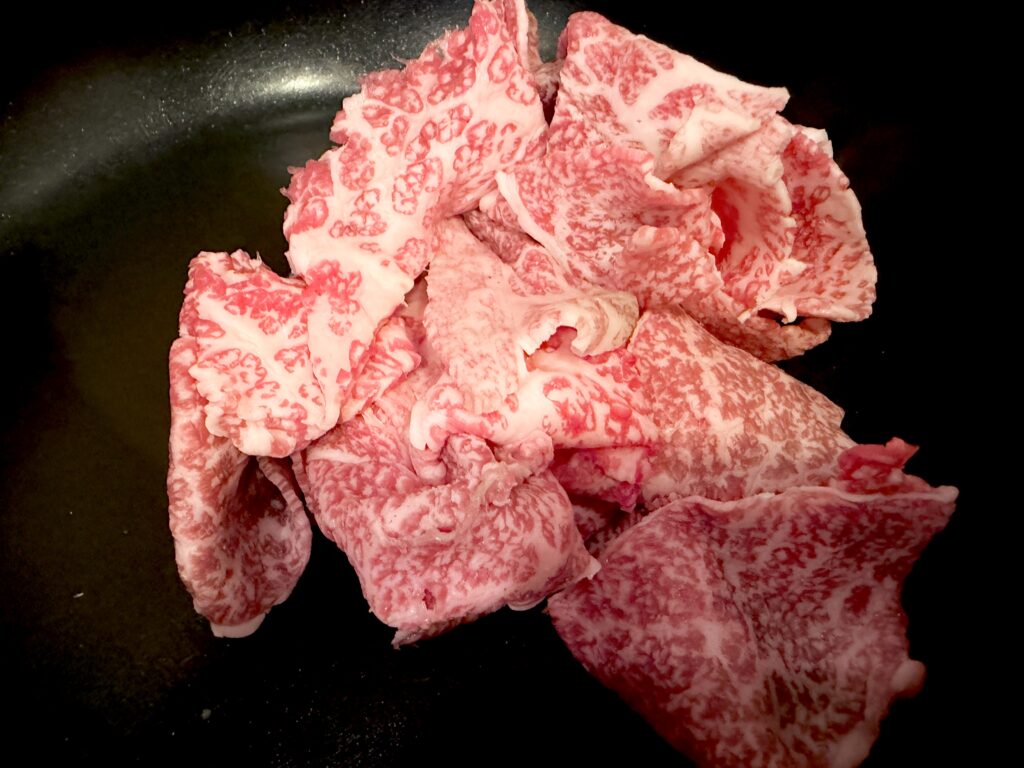
Heat a sukiyaki pot or a large, deep frying pan over medium heat.
Add a small amount of beef fat or cooking oil, then spread the thinly sliced beef across the pan.
Cook until the beef begins to change color.
At home, we sometimes cook all the beef at once. You can also cook only part of the beef first and add the rest later.
Cooking the beef first leaves its fat and flavor in the pan, which makes the vegetables taste even better.
2. Add the sukiyaki sauce
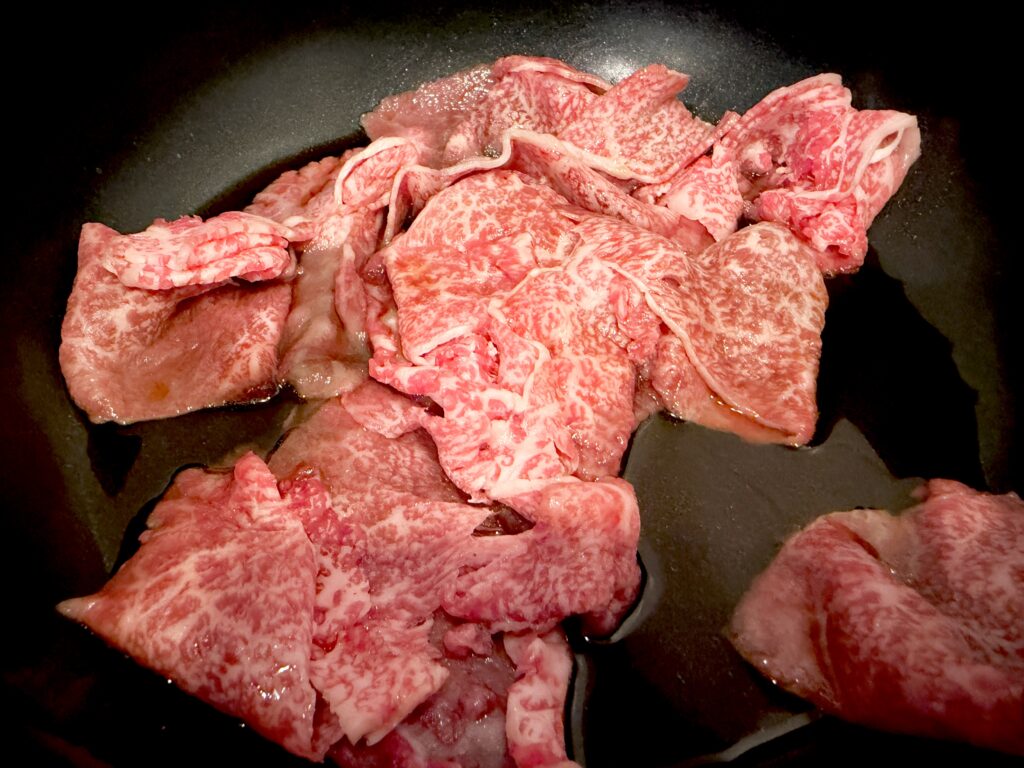
When the beef has started to brown, pour in about one-half to two-thirds of the prepared sukiyaki sauce.
I do not recommend adding all of it immediately because the vegetables will release more liquid as they cook.
Keep the remaining sauce nearby and add more later if needed.
3. Add the vegetables, noodles, and tofu
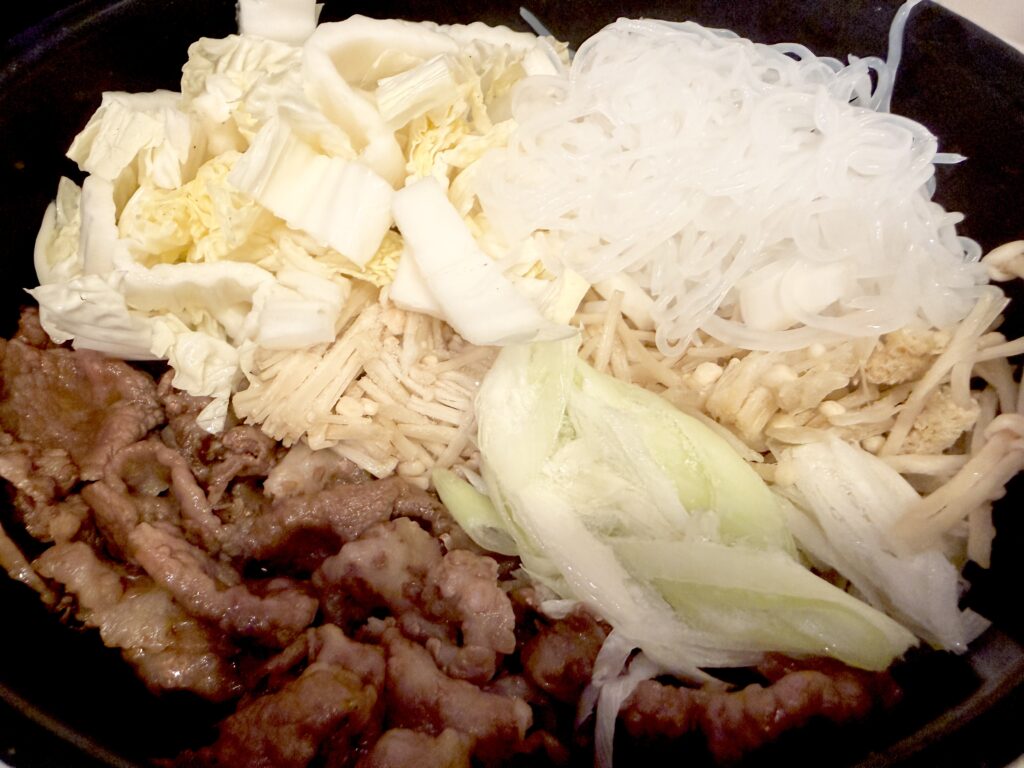
Move the beef slightly to one side of the pan.
Add the napa cabbage, green onion, enoki mushrooms, shirataki noodles, and tofu.
You can arrange everything neatly, but this is a simple family meal, so it does not need to look perfect.
The napa cabbage may look like a lot at first, but it will quickly become smaller as it cooks.
4. Simmer until the vegetables are tender
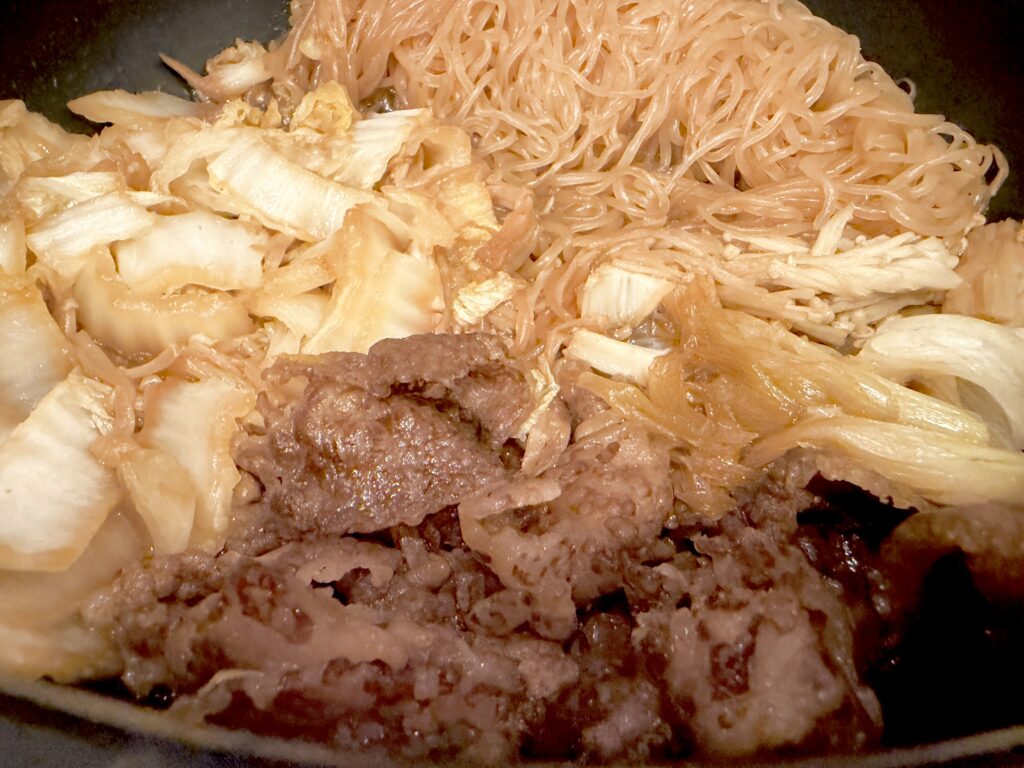
Cover the pan and let everything simmer over medium-low heat.
As the napa cabbage cooks, it will release water and increase the amount of liquid in the pan.
Check the flavor while it cooks. Add more of the remaining sukiyaki sauce if needed.
If the sauce becomes too strong or salty, add a little water. If it tastes too light, add more sauce or a small amount of soy sauce.
5. Add the shungiku or kale last
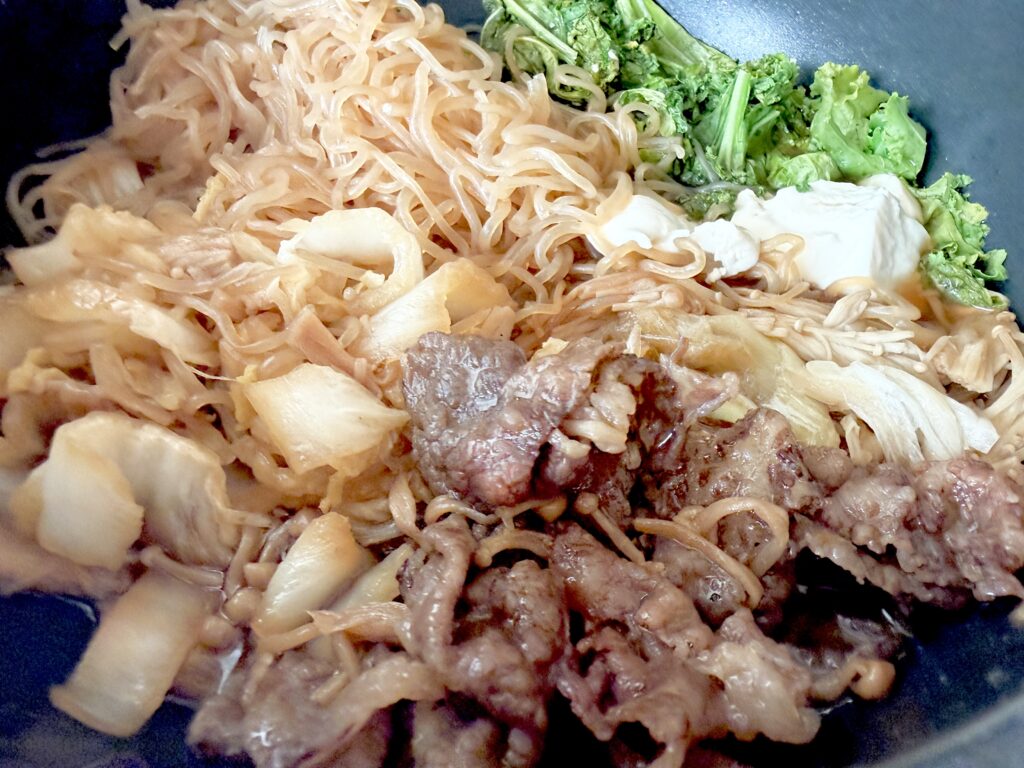
When the napa cabbage and green onion are tender, add the shungiku or kale.
Leafy vegetables cook quickly, so they only need to be simmered until slightly wilted.
If the kale has thick stems, add the stems first and the leaves a little later.
Serve the sukiyaki directly from the pan.
In Japan, sukiyaki is often dipped in raw beaten egg before eating. If you would like to try this, use eggs that are specifically safe to eat raw or use pasteurized eggs.
Why We Cook the Beef First
There are several ways to make sukiyaki, but in our family, we like to cook the beef before adding the sauce and vegetables.
The lightly browned beef tastes delicious with the sweet soy sauce, and the fat left in the pan adds flavor to the napa cabbage, mushrooms, tofu, and shirataki noodles.
Sometimes we eat a few pieces of the first batch of beef before adding all the vegetables. We then add the remaining beef later so that it does not become overcooked.
There is no need to follow one strict method. You can cook everything in the way that is easiest for your family.
You Can Add Plenty of Napa Cabbage
Napa cabbage becomes much smaller as it cooks, so it is fine to add plenty.
The leafy parts become soft and soak up the sweet sukiyaki sauce, while the thicker white parts add a slightly crisp texture.
Napa cabbage also releases water. If you add a large amount, the sauce may become milder as it cooks.
If you make sukiyaki without napa cabbage, the pan may contain less liquid. In that case, add the sukiyaki sauce gradually rather than pouring it all in at once.
Shirataki Noodles Soak Up the Sauce
Shirataki are translucent noodles made from konjac.
They have very little flavor on their own, but they absorb the sweet and savory sukiyaki sauce as they cook.
I like to add them fairly early so they have time to soak up the flavor.
Cutting the noodles before adding them makes the sukiyaki easier to serve and eat.
Firm or Grilled Tofu Works Best
Grilled tofu is often used in Japanese sukiyaki because it holds its shape well while simmering.
If grilled tofu is not available, regular firm tofu is fine.
Drain it first and cut it into fairly large pieces so it does not break apart too easily.
The tofu absorbs the sauce and becomes one of the best parts of the finished sukiyaki.
Kale Is a Delicious Alternative to Shungiku
Shungiku, also known as chrysanthemum greens, is a traditional sukiyaki ingredient in Japan.
This time, I also added kale.
Kale can have a slightly bitter flavor, but it becomes much easier to eat when combined with the sweet sukiyaki sauce and rich beef.
It also cooks down, so this is a useful way to eat a larger amount of kale than you might use in a salad.
Add kale near the end of cooking, just as you would add shungiku. If it is simmered for too long, it can become very soft and lose its bright green color.
This is also a helpful recipe when you have purchased a large bag of kale from Costco and want to use it for something other than salad or stir-fry.
How to Adjust the Sukiyaki Sauce
Every family has a different preference for sukiyaki.
Some people like it quite sweet, while others prefer a lighter sauce.
If the sauce is too strong
Add a little water and taste it again.
It is best to add the water gradually so that the sauce does not become too weak.
Adding more napa cabbage, mushrooms, or tofu can also soften the flavor.
If the sauce is too light
Add some of the remaining sukiyaki sauce.
You can also add a small amount of soy sauce if it needs more saltiness or sugar if it needs more sweetness.
If the sauce is too sweet
Add a little water and soy sauce.
The next time you make it, start with 6 tablespoons of sugar and add more only if needed.
The amount of water released by the vegetables will affect the final taste, so it is fine to adjust the sauce as you cook.
You Can Make Sukiyaki in a Frying Pan
You do not need a traditional Japanese sukiyaki pot for this recipe.
A large, deep frying pan works very well and may be more convenient for everyday cooking.
The wide surface makes it easy to cook the beef without overlapping the slices, and there is plenty of room for the vegetables.
A tabletop electric skillet can also be used. Cook the beef first, then add the sauce and other ingredients in the same order.
Other Ingredients You Can Add
We used beef, napa cabbage, green onion, enoki mushrooms, shirataki noodles, tofu, and leafy vegetables.
You can also add:
- Shiitake mushrooms
- Maitake mushrooms
- Onion
- Burdock root
- Mizuna
- Wheat gluten cakes
- Udon noodles
You do not need to buy every traditional ingredient.
Sukiyaki is still delicious when made with the vegetables and mushrooms you already have at home.
Finish with Sukiyaki Udon
After the beef and vegetables have been eaten, the remaining sauce will be full of flavor.
Add cooked udon noodles to the pan and simmer until they have absorbed some of the sauce.
If the sauce is too concentrated, add a little water before adding the noodles.
You can also add rice and beaten egg to make a simple rice dish with the leftover broth.
Frequently Asked Questions
Should I add all the sauce at once?
I recommend starting with about one-half to two-thirds of the sauce.
Napa cabbage and other vegetables release water while cooking, so it is easier to adjust the flavor if you keep some sauce aside.
Do I have to cook all the beef first?
No.
You can cook a few slices first, then add the remaining beef later while eating the sukiyaki.
This helps prevent the thinly sliced beef from becoming overcooked.
Can I make sukiyaki without napa cabbage?
Yes.
You can use onion, green onion, mushrooms, shungiku, kale, or other vegetables you have at home.
Without napa cabbage, less water may be released into the pan, so add the sauce gradually.
When should I add kale?
Add the kale after the other ingredients are almost cooked.
If the stems are thick, add them slightly earlier and add the leaves at the end.
Is this Kansai-style or Kanto-style sukiyaki?
Kanto-style sukiyaki is generally simmered in a prepared sauce, while Kansai-style sukiyaki often begins by cooking the beef and seasoning it directly with sugar and soy sauce.
Our family recipe combines both ideas: we cook the beef first and then add a homemade sukiyaki sauce.
It is simply an easy method that works well for us at home.
Final Thoughts
This homemade sukiyaki starts with 400 g of thinly sliced beef, followed by a simple sauce and plenty of vegetables.
The sauce is made with 100 ml water, 150 ml sake, 150 ml soy sauce, 8 tablespoons sugar, and dashi granules.
Napa cabbage, green onion, enoki mushrooms, shirataki noodles, and tofu are added after the beef. Shungiku or kale is added at the end and cooked only until slightly wilted.
The amounts of vegetables and the strength of the sauce can be adjusted to suit your family.
It is an easy, comforting meal to enjoy together at the table.

A5 Japanese Wagyu Chuck Roll for Sukiyaki and Shabu-Shabu
Premium A5-grade Japanese Wagyu with rich marbling and a tender texture. Available in 500g or 1kg sizes, it is ideal for sukiyaki, shabu-shabu, special dinners, and luxury food gifts.

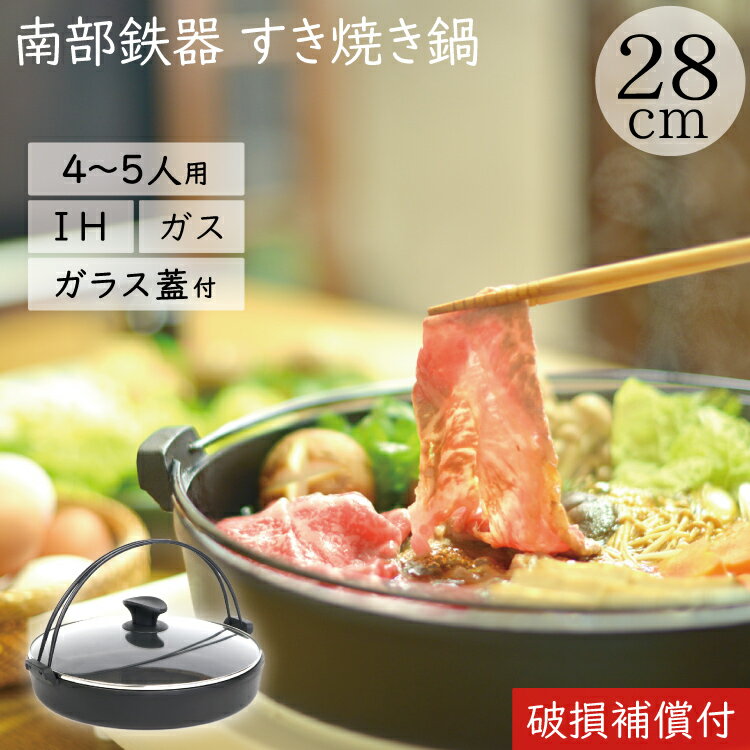
Iwachu Nambu Cast Iron Sukiyaki Pot with Glass Lid – 28 cm
A traditional Japanese cast iron pot made by Iwachu, ideal for serving sukiyaki for four to five people. The 28 cm pot comes with a glass lid and can be used on IH, gas, and direct-heat stovetops.